



Dear Sir or Madam, in modern manufacturing, distribution, and global supply chains, protective packaging plays a foundational role in safeguarding goods, preserving product quality, and enhancing brand value. Among various industrial packaging materials, woven polypropylene (PP) packaging stands out as a preferred choice across diverse sectors. Understanding how these durable containers are manufactured allows organizations to make informed decisions when selecting solutions for products ranging from industrial materials to food packaging and agricultural commodities. This article provides a comprehensive overview of the professional production workflow and outlines essential criteria for enterprises looking to partner with reliable manufacturers.
Overview of the Importance of PP Woven Packaging in Production and Distribution
Polypropylene woven bags have become indispensable across numerous industries due to their exceptional mechanical strength, resistance to tearing, and versatility. During storage and long-distance transport, goods are routinely exposed to environmental stressors such as moisture, humidity, friction, and stacking pressure. High-quality PP packaging acts as the first line of defense, maintaining structural integrity and preventing product loss or contamination. Whether utilized for heavy industrial goods or consumer items, dependable packaging ensures that supply chains operate smoothly from the factory floor to the end consumer.
Beyond physical protection, modern packaging serves as a critical marketing and communication tool. Advanced printing technologies allow businesses to display vibrant logos, nutritional information, handling instructions, and compliance certifications directly on the packaging surface. This dual functionality—combining robust physical containment with effective visual presentation—underscores why enterprises must carefully evaluate both the material specifications and the manufacturing capabilities of their packaging suppliers before placing bulk orders.
Detailed Analysis of Each Stage in the Professional PP Packaging Production Process
The creation of high-grade woven polypropylene packaging involves a sophisticated sequence of engineering steps. Each phase requires precise calibration of machinery and strict quality control to ensure that the final product meets exacting industrial standards. Below is an examination of the core stages that transform raw polymer resin into finished, ready-to-use bags.
Tape Extrusion and PP Film Roll Creation
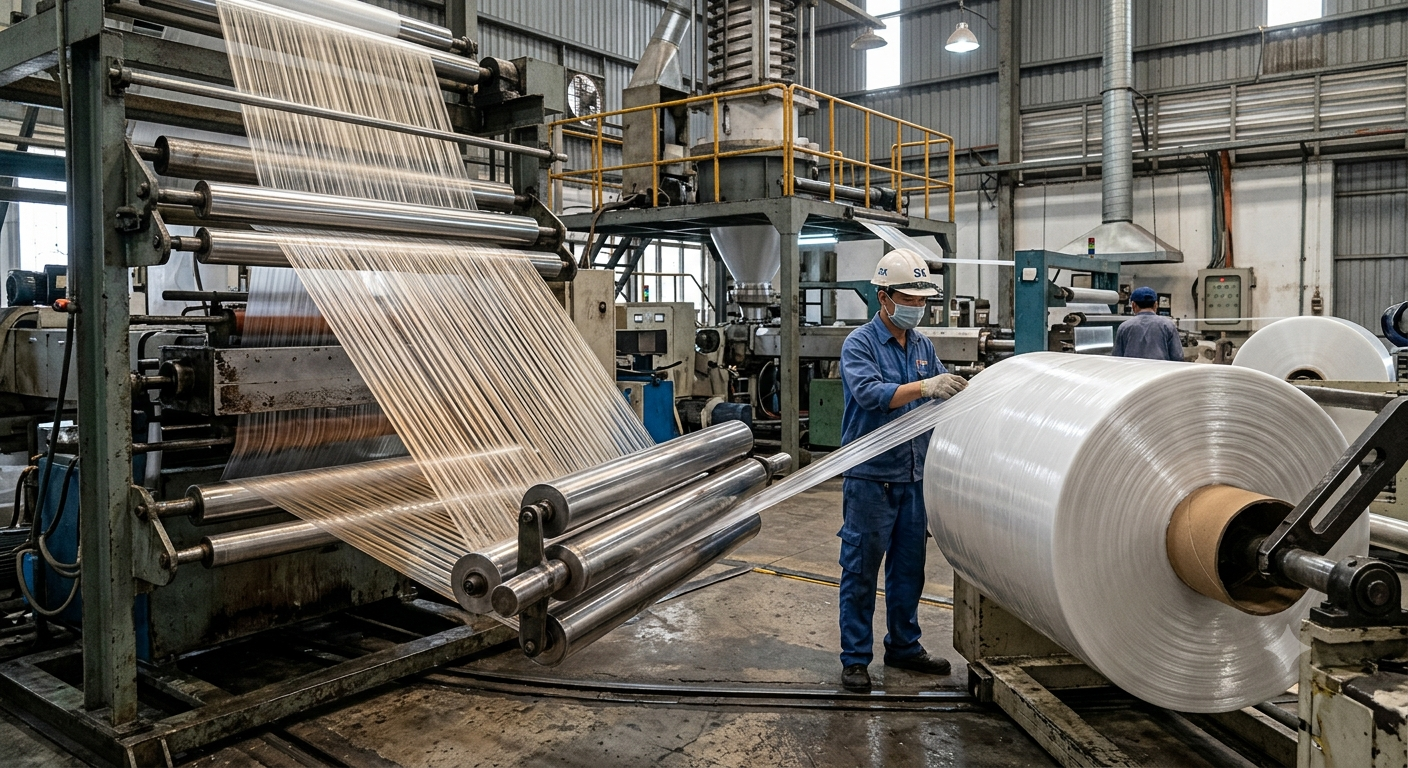
The manufacturing journey begins with raw polypropylene resin pellets, often blended with specific additives such as UV stabilizers, color masterbatches, or calcium carbonate to achieve desired flexibility and color. These raw materials are fed into an extruder hopper, where they are melted under controlled high temperatures. The molten polymer is then extruded through a flat die into a thin film sheet. Once cooled, precision cutting blades slit the film longitudinally into narrow tapes. These tapes are subsequently stretched under heat to align the polymer molecules, significantly increasing their tensile strength before they are wound onto bobbins in preparation for the weaving stage.
Circular Loom Systems for Tubular Packaging Formation
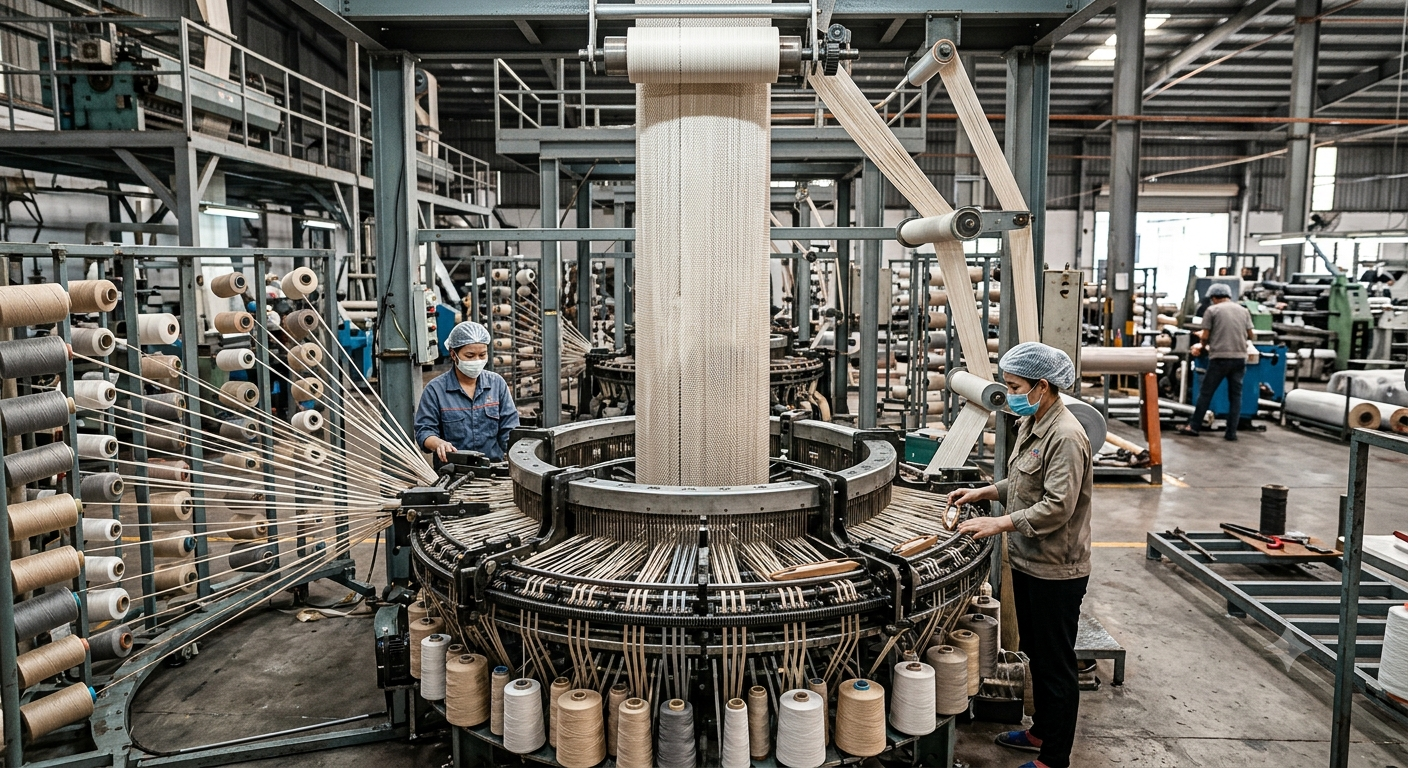
Once the tapes are wound onto bobs, they are transferred to circular looms. In this stage, warp tapes are systematically interlaced with weft tapes. Modern circular weaving machines operate at high speeds, intertwining the tapes to form a continuous seamless tubular fabric or flat woven fabric. The density of the weave, measured in mesh count per square inch, directly influences the load-bearing capacity and breathability of the resulting container. Seamless tubular fabric is particularly advantageous for applications requiring high burst strength, as it eliminates side seams that could otherwise serve as points of structural weakness under heavy loads.
High-Quality Printing and Lamination Technology
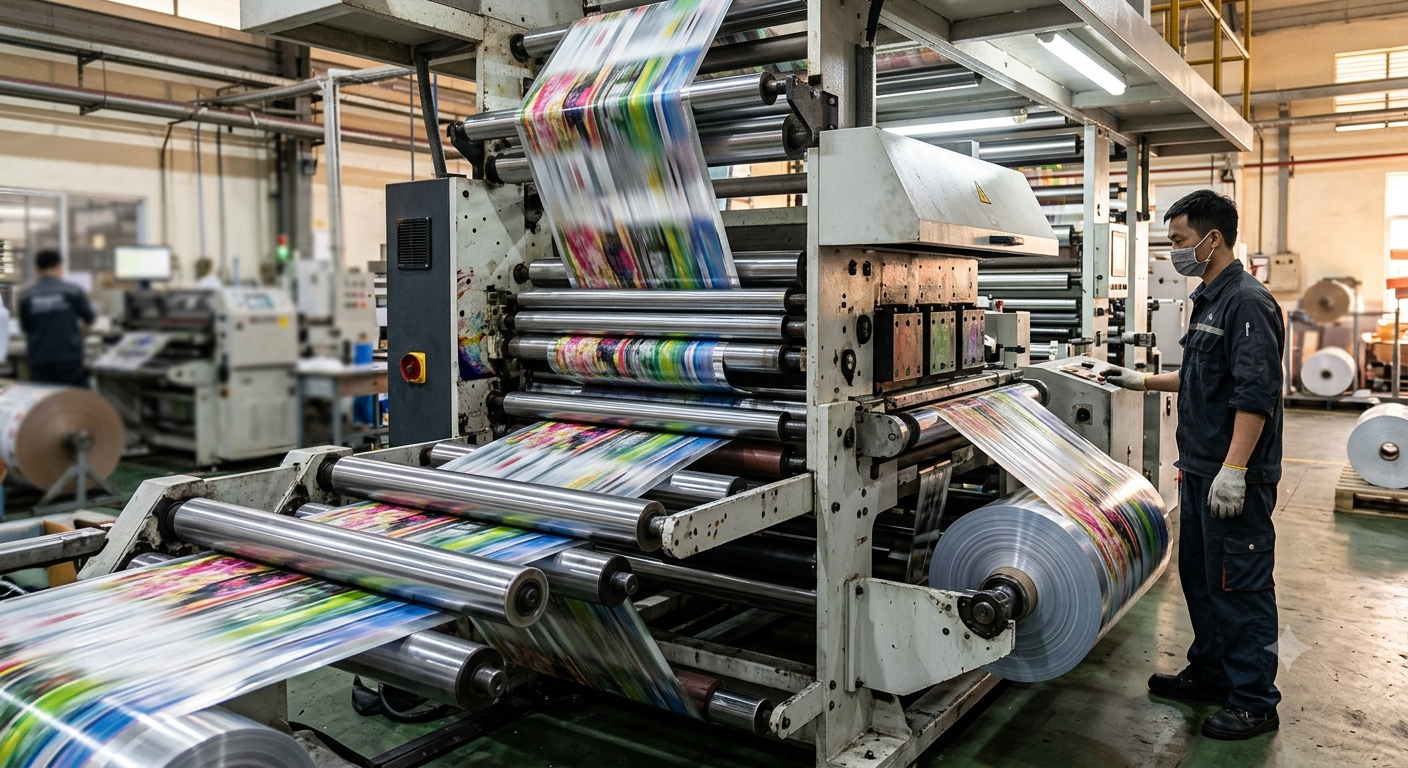
Aesthetics and informational clarity are vital for commercial success, making printing and lamination a crucial step in the production line. Depending on the design complexity and order volume, manufacturers utilize advanced printing methods such as flexographic printing or gravure cylinder printing. Flexography is ideal for straightforward text and block colors, while gravure printing delivers photographic-quality imagery and intricate designs. Following the printing process, a thin layer of protective plastic film—often polyethylene—is laminated onto the woven fabric. This lamination step seals the weave, prevents moisture ingress, protects the printed ink from scratching, and provides a smooth surface for subsequent handling.
Cutting, Stitching, Shaping, and Finished Product Inspection
In the final manufacturing phase, the continuous printed and laminated tube is cut into individual bag lengths using thermal or cold-cutting blades that prevent fraying. Skilled operators or automated machinery then fold and stitch the bottom or top hems according to specified design requirements, such as valve bottoms, block bottoms, or open-mouth hems. Liners may also be inserted for applications requiring enhanced moisture barriers. Before packaging for delivery, every batch undergoes rigorous quality inspection. Technicians test tensile strength, drop resistance, print accuracy, and dimensional tolerances to ensure zero defects reach the customer.
Important Criteria Businesses Must Know When Ordering Custom Packaging
When enterprises commission custom packaging, focusing solely on unit price can lead to operational compromises. To secure optimal value, procurement teams should evaluate several critical criteria. First, define the exact payload requirements and environmental conditions the packaging will encounter. For instance, storing hygroscopic goods demands laminated or lined structures, whereas agricultural products often require breathable unlaminated weaves. Second, assess the supplier's technical infrastructure, machinery modernity, and quality management certifications. A capable manufacturer should offer transparent consultations regarding GSM (grams per square meter) specifications, denier strength, and custom sizing. Finally, verify lead times, minimum order quantities, and after-sales support to guarantee a stable, uninterrupted supply chain.
Frequently Asked Questions About the Woven PP Packaging Production Process
Practical Considerations for Optimizing Costs When Ordering Packaging Production
Balancing high quality with cost efficiency is a primary objective for every business purchasing industrial packaging. To optimize expenditures without sacrificing performance, organizations should plan their procurement cycles well in advance, leveraging bulk volume discounts by consolidating orders rather than making frequent small purchases. Additionally, collaborating closely with manufacturers during the design phase can help refine dimensions, eliminate redundant material layers, and standardize bag sizes across different product lines. By streamlining specifications and maintaining transparent communication with trusted suppliers, businesses can secure durable, professional packaging that protects their products and supports long-term commercial growth.
Contact information
CÔNG TY TNHH SẢN XUẤT THƯƠNG MẠI NGỌC YẾN
Address: B19/399 Trần Đại Nghĩa, Ấp 2, Xã Tân Nhựt, TP. Hồ Chí Minh
Hotline: 0336 943423
Email: congtyngocyen2020@gmail.com
Website: baobingocyen.com
